Robots.txt Architecture: Web Crawling Protocols, RFC 9309, and Search Engine Directives
Master the mechanics of web crawling protocols. Learn RFC 9309 standards, crawl budget allocation, regex path matching, and how to avoid indexing traps.

A single line in a plain text file can accidentally wipe your entire web application from search engine results.
Every automated crawler on the internet—from Googlebot and Bingbot to AI scrapers like GPTBot and ClaudeBot—checks the exact root URL /robots.txt before parsing pages. Yet many engineers treat robots.txt as an afterthought or confuse crawling prevention with indexing prevention.
In this guide, you will learn the mechanics behind the Robots Exclusion Protocol (formalized in RFC 9309), how crawler parsers resolve rule conflicts, how path pattern matching works, and how to configure robots.txt properly.
💡 Key Takeaways#
- RFC 9309 Standard: Published by the IETF in 2022, RFC 9309 formalized 28 years of informal crawler conventions into an official internet standard.
- Crawling vs Indexing: A
Disallowrule prevents Googlebot from fetching a page, but if another site links to that URL, search engines can still index the URL without reading its content. To stop indexing, useX-Robots-Tag: noindex. - Longest Match Precedence: When an
AllowandDisallowrule conflict for the same path, the rule with the longest matching character length wins. - Do Not Block Rendering Assets: Disallowing
/static/,/css/, or/js/prevents search bots from rendering your page layout, triggering severe mobile usability penalties. - AI Scraper Directives: Modern configurations separate search engine bots from AI training bots using targeted
User-agentblocks.
1. How the Robots Exclusion Protocol Works Under the Hood#
When a web crawler arrives at example.com, it makes an initial HTTP GET request:
GET /robots.txt HTTP/1.1
Host: example.com
User-Agent: Googlebot/2.1 (+http://www.google.com/bot.html)
The crawler interprets the HTTP response status code before requesting any other path:
If the server returns an HTTP 5xx error or 403 Forbidden, compliant search bots treat the entire site as disallowed to prevent overloading a struggling system.
2. Rule Resolution & Precedence: The Longest Match Algorithm#
Under RFC 9309, rules are not evaluated in top-to-bottom order. Instead, crawlers evaluate rules using the longest matching path rule.
Consider this configuration:
User-agent: Googlebot
Disallow: /articles/
Allow: /articles/engineering/
What happens when Googlebot requests /articles/engineering/distributed-systems?
Because /articles/engineering/ (22 characters) is longer than /articles/ (10 characters), the Allow directive takes precedence.
If two conflicting rules have the exact same character length, RFC 9309 dictates that the least restrictive directive (Allow) wins.
3. Wildcards and Pattern Matching#
Robots.txt supports two pattern-matching operators:
*(Asterisk): Matches zero or more instances of any valid character.$(Dollar Sign): Anchors the end of the URL pattern.
Practical Pattern Examples#
# 1. Block all search query parameter URLs
Disallow: /*?*

# 2. Block direct access to internal JSON data endpoints
Disallow: /*.json$

# 3. Block staging subdirectories anywhere in the tree
Disallow: */staging/*

# 4. Allow only specific file extensions in a media folder
Disallow: /media/
Allow: /media/*.png$
Allow: /media/*.jpg$
Notice the difference between /private and /private/:
Disallow: /privateblocks/private,/private.html,/privatization, and/private/data.Disallow: /private/blocks only paths within that directory, leaving/private-policycrawlable.
4. Crawling vs Indexing: The Common Production Trap#
The most frequent mistake in technical SEO is using robots.txt to keep confidential or draft pages out of search engine indexes.
Because Googlebot was blocked from fetching the page, it could not read any <meta name="robots" content="noindex"> tag inside the HTML document. Google indexes the bare URL anyway based purely on external link signals.
The Correct Fix#
To guarantee a page is never indexed:
- Allow the crawler to fetch the page in
robots.txt. - Return an
X-Robots-Tag: noindex, nofollowHTTP response header, or place<meta name="robots" content="noindex">in the HTML<head>. - Once the bot reads the noindex directive, it removes the page from search results.
5. Segmenting AI Training Bots vs Search Engines#
Modern web architectures often separate commercial search crawlers from automated AI scrapers.
# General Search Engines: Full crawling permitted
User-agent: Googlebot
User-agent: Bingbot
Allow: /

# Block automated LLM training scrapers from content scraping
User-agent: GPTBot
User-agent: ClaudeBot
User-agent: CCBot
User-agent: Google-Extended
User-agent: PerplexityBot
Disallow: /

# Global fallback for unlisted crawlers
User-agent: *
Disallow: /api/
Disallow: /admin/
Disallow: /drafts/

Sitemap: https://joeyjazwinski.com/sitemap.xml
Always declare your XML sitemap URL at the bottom of the file. Crawlers read this directive to seed their initial discovery queue.
6. Interactive Developer Tool: Build & Validate Your Robots.txt#
Need to generate custom directives, validate pattern wildcards, or format rules for specific bot agents?
Generate clean, RFC 9309 compliant configurations instantly using the interactive tool:
👉 Try the Interactive Robots.txt Generator & Validator
You can configure user-agents, add allow/disallow paths, append sitemap links, and download the validated text file directly for your project.
Conclusion: Checklist for Production Deployment#
Before pushing a robots.txt file to production:
- Ensure the file is accessible at the exact root:
https://yourdomain.com/robots.txtwithContent-Type: text/plain. - Never disallow CSS, JavaScript, or font directories needed for page rendering.
- Test pattern rules against the longest-match algorithm to avoid accidental exclusions.
- Use
noindexresponse headers for indexing prevention instead of robots.txt.
Joey Jazwinski
Hi, I'm Joey — a software engineer building modern applications, exploring artificial intelligence, and sharing my journey through code. 🚀
Recommended Articles
View all posts →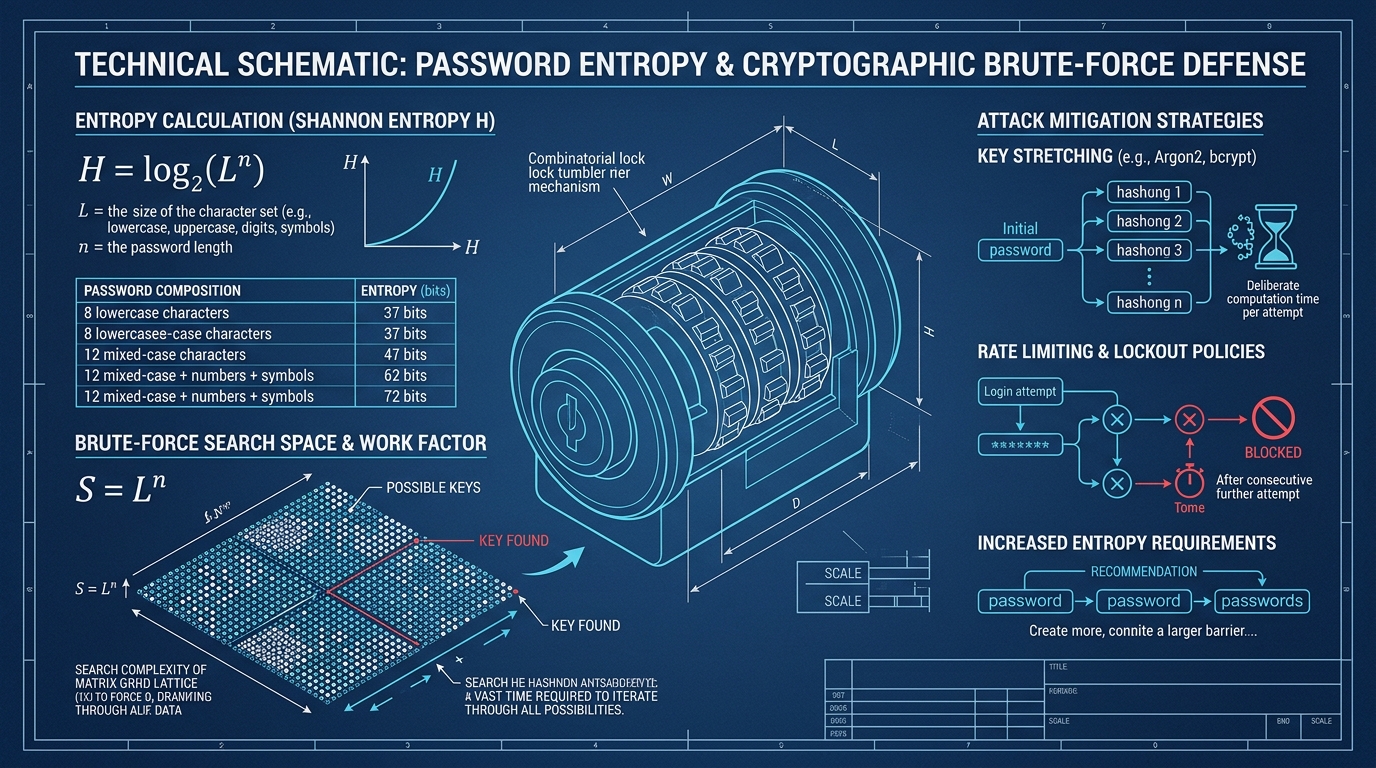
Password Entropy Explained: The Math Behind Brute-Force Defense and Diceware Passphrases
Learn how password entropy is calculated, how brute-force search spaces scale exponentially, and why Diceware passphrases beat complex short strings.
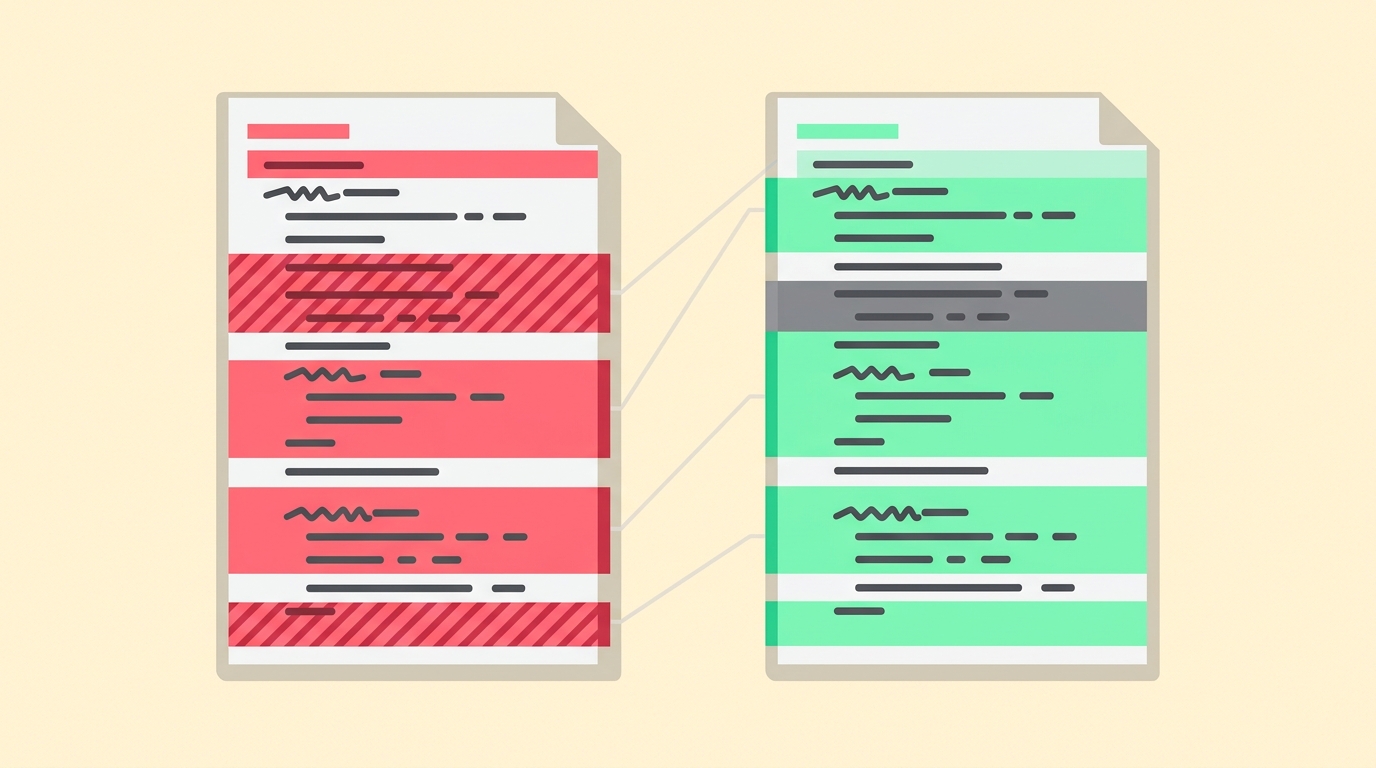
How Diff Algorithms Work: Myers Diff, Shortest Edit Script (SES), and Text Comparison Guide
Master the mechanics behind git diff and text comparison. Learn the Myers diff algorithm, Longest Common Subsequence (LCS), Shortest Edit Scripts, and compare code in real-time.

Mastering Cron Expressions: Syntax Standards, Distributed Schedulers, and Visual Guide
Master Unix and modern Cron expressions from first principles. Understand the 5-field and 6-field formats, timezones, distributed locking with Redis, and debug schedules in real-time.